The Shared Table Gives a Gathering a Natural Centre
A shared table gives a gathering a natural centre: choose its size, contents and position to help guests settle, talk or join an activity.
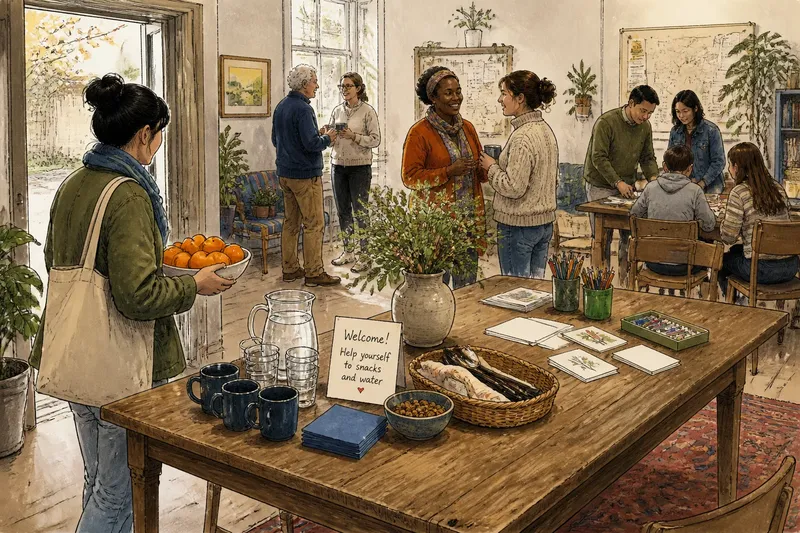
Someone arrives carrying a bowl of mandarins, pauses by the doorway and looks for somewhere to put them. A shared table gives a gathering a natural centre: a visible place to set things down, meet another guest or join what is happening. The best arrangement depends on the kind of gathering, the room and what you want the table to make easier.
Think of the table as a well-placed coat hook: it quietly answers a practical question before anyone has to ask. It need not be large or elaborately dressed. Its job is to offer a clear invitation without making every guest feel they must gather around it.
Choose by gathering
Start with the activity rather than the furniture. A shared table works differently at a meal, a casual open house and a hands-on activity. Decide which action should feel easiest: putting something down, starting a conversation, or taking part.
- For a shared meal: Choose a table that supports serving and passing dishes, with enough open space for people to sit or stand nearby. Keep the food easy to see and make a separate place for coats or bags if the room allows; otherwise, those items can crowd the serving area.
- For a casual gathering: Make the table a landing place rather than the centre of a formal arrangement. A jug of water, cups and a small bowl for brought-in snacks give guests an uncomplicated reason to approach it.
- For a group activity: Set out only the materials needed to begin. A shared craft, card game or map-marking activity benefits from a surface that is ready to use, not one buried under refreshments and decorations.
- For conversation across ages or interests: Offer more than one way to take part. A table with a simple activity can give someone a reason to linger, while nearby chairs leave room for people who would rather talk than use the materials.
These arrangements can overlap, but one should lead. If food is the main purpose, protect space for serving. If people are coming to make something together, let the activity occupy the useful surface and place refreshments elsewhere.
Match the room
A table creates a centre only if people can reach it without blocking the room. Look at the doorway, the route to the kitchen or garden, and the places where guests are likely to pause. Set the table where it is visible soon after arrival but does not sit in the natural path between those points.
In a narrow room, a smaller table against a wall may work better than a large one in the middle. It can still give guests a clear place to put a plate or find a prompt for conversation. In a spacious room, a table may help draw people together, provided there are seats and open space around it rather than a bottleneck on one side.
Consider who needs to use the room. Leave a clear route for mobility aids, pushchairs and people carrying dishes. If a table must be moved to make that route possible, choose a position that is easy to adjust before guests arrive. The useful centre is the one people can approach comfortably, not necessarily the visual centre of the room.
Decide what belongs
Every object on the table makes a quiet suggestion. A stack of plates says “help yourself”; a pile of craft supplies says “begin here”; a vase placed in the middle may say “look, but do not touch”. Choose objects that support the intended activity and leave enough open surface for people to act on that invitation.
For a general gathering, useful items might include water, cups, napkins and a small card naming what is available. For a shared activity, place tools within reach and group materials by task: coloured pencils beside paper, for instance, rather than scattered among snacks. If people bring dishes, reserve a distinct spot for them so the table can accommodate arrivals without becoming an unsorted heap.
Keep personal belongings separate from shared supplies. A tray can collect serving utensils; a labelled bowl can hold clean pens. Clear boundaries reduce the awkward question of whether something is communal. Where a food label or product instruction affects use, follow it; local requirements may also apply to serving food at public events.
What fits your situation?
Should the table be in the middle of the room?
Use a central position when people need to gather around a shared activity or pass dishes across the surface. If guests must cross its path to reach a doorway, kitchen or seating area, move it aside so the table invites rather than interrupts.
What if the room is too small?
Choose a compact surface, a folding table if appropriate, or a clear section of a counter. A modest landing place is more useful than a larger table that restricts movement or forces guests to crowd around one corner.
How many things should go on it?
Put out the items needed to begin and leave the remaining surface open. Guests need room to set down a cup, plate or personal contribution as well as to use the shared materials.
Does every gathering need a table?
No. A standing conversation, walk or outdoor activity may have no natural use for one. Add a table only if it solves a real problem, such as providing a place for water, shared materials or things guests bring.
Make the first move easy
A table can reduce the small uncertainties that make entering a group feel difficult. A newcomer may not know where to put a plate or whether an activity is open to everyone. A visible cue answers that uncertainty without requiring a host to repeat instructions throughout the gathering.
Say you are hosting an informal evening in a shared community room and expect people to arrive with snacks. You place a tray for food at one end of a side table, cups and water at the other, and leave the middle clear. A small note identifies the shared dishes. The expected result is observable: guests can add what they have brought, find a drink and start a conversation without first asking where each item belongs.
For an activity, use a similarly direct cue. Put a sample card beside blank cards and coloured pencils, or leave one chair available at the work surface. A sample shows what someone might do; it should not imply that everyone must copy it. If the activity requires explanation, put the materials out with a brief, readable invitation and be ready to answer questions.
Keep the centre flexible
A gathering changes as people arrive. The table that begins as a place for cups may later become the spot where someone unfolds a map or shares a recipe. Keep a little open space so this change can happen without making guests feel they are disturbing a carefully arranged display.
For a small event, a quick check before opening the door can settle the practical details:
- Can a guest see the table from the entrance or the main seating area?
- Is there a clear route past it to the places people need to reach?
- Are shared and personal items easy to tell apart?
- Does the table support the gathering’s main activity rather than competing with it?
- Is there room for someone to join without asking another person to move?
If one answer is no, change the position or remove an object before adding anything decorative. A clear surface, a usable route and a simple cue usually do more to help guests settle than an elaborate display.
The shared table is most successful when it offers an invitation, not an obligation. Leave nearby seating or standing space for people who want to talk without joining the activity, and let guests use the table in their own way. A well-chosen shared table gives a gathering a natural centre while keeping the room open to everyone who enters.